Are Hotels Becoming the New Media?
This summer, some of the world's most recognizable luxury brands aren't opening new stores.
They're taking over hotels.
Missoni has transformed the pool experience at OKU Ibiza. Amouage has created a fragrance-led activation at Nobu Marbella. Dior has taken over the iconic Il Riccio beach club in Capri, while Armani has launched a branded beach club experience in Forte dei Marmi.
At first glance, these partnerships might seem like beautifully executed collaborations or seasonal marketing campaigns. But together, they point to a much larger shift in luxury marketing.
Brands are increasingly moving beyond the digital screen and into experiences.
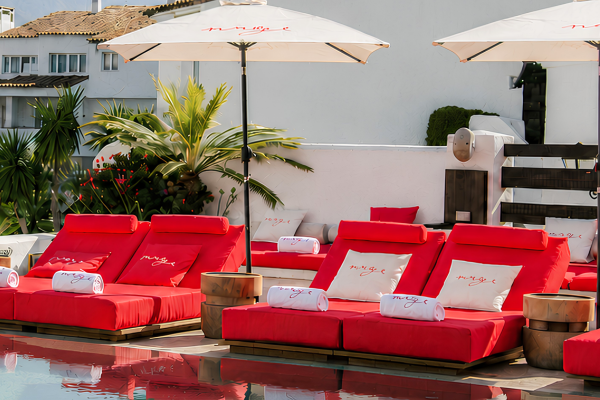
Amouage at Nobu Pool in Marbella, 2026
The Shift From Attention to Immersion
For years, marketers have competed for attention through social media, digital advertising, and increasingly crowded online channels. But in a world of endless content and constant notifications, attention has become one of our scarcest resources.
Luxury brands are responding by investing in something different.
Immersion.
Rather than interrupting consumers with an advertisement, they are embedding themselves into experiences that people actively choose to be part of. A fragrance becomes part of a poolside afternoon. A fashion brand becomes intertwined with a summer holiday. A destination becomes synonymous with a lifestyle.
The experience itself becomes the marketing.
Why Hotels?
Hotels offer something that few other channels can.
Connection.
A guest doesn't spend five seconds with a billboard or scroll past an ad in their feed. They spend days immersed in an environment. They discover, experience, photograph, and remember.
For luxury brands, this creates an opportunity to connect with travellers in a way that feels natural and meaningful.
For hotels, it presents an equally exciting opportunity.
These partnerships can elevate a property's profile, introduce it to new audiences, and create experiences that extend far beyond the stay itself.
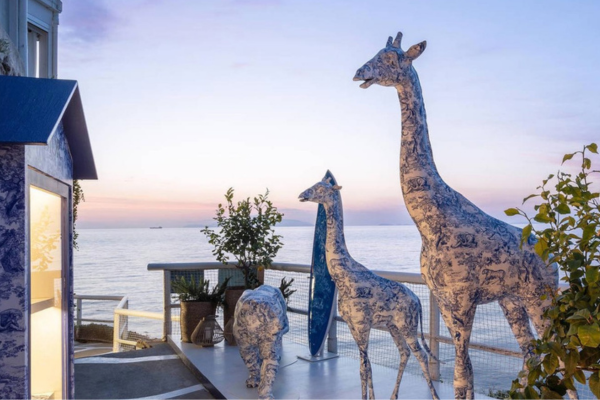
Dior and Il Riccio Restaurant & Beach Club, 2024
The Social Media Effect
Ironically, many of these experiences end up performing exceptionally well online.
A designer pool takeover or a fragrance-inspired beach club is inherently visual and highly shareable. Guests create content, influencers amplify the experience, and suddenly a single hotel activation generates millions of impressions across social media.
The difference is that the content begins with a real-world experience.
The hotel becomes both the stage and the story.
Are Hotels Becoming the New Media?
The rise of these collaborations raises an interesting question.
Are hotels becoming the new media?
Not in the traditional sense, but in the way that media has always functioned. Media creates attention. Media shapes culture. Media influences perception and creates communities around shared experiences. Today's most successful hotels are doing exactly that.
They are no longer simply places to stay. They are becoming platforms for storytelling, cultural relevance, and experiential connection.
What This Means for Boutique and Luxury Hotels
The most memorable hotel brands of the future may not be defined solely by their rooms, amenities, or locations.
They may be defined by the experiences they create and the partnerships they cultivate.
As luxury brands continue to search for meaningful ways to connect with consumers, hotels have a unique opportunity to become more than destinations.
They can become places where culture happens.
And in a world increasingly shaped by digital interactions, that may be one of hospitality's greatest strengths.